Most organizations approach their first instructional design project like ordering takeout: they expect to place an order and receive a finished product. The reality looks more like planning a custom home build, complete with blueprints, approval cycles, and multiple walk-throughs before anyone moves in.
If you’re a Learning Director or CLO being asked to close a performance gap, not just produce training content, you need a partner who understands that difference. And you need more than a training module; you need measurable behavior change.
Most instructional design consulting engagements go sideways because teams skip proper discovery and rush into development. That shortcut creates costly rework cycles and delivers learning that addresses symptoms rather than root causes. Understanding what happens at each phase helps you allocate resources, set realistic timelines, and get the most out of the partnership.
Here’s what a structured engagement actually looks like, from the first conversation to post-launch optimization.
Instructional Design Consulting, Phase by Phase
Discovery Phase Sets the Foundation for Project Success
Your engagement begins with discovery, not content development. This phase typically runs for 2 to 3 weeks and determines whether the project succeeds or ends up in a costly revision cycle. Skipping discovery is the most common reason instructional design projects miss the mark. Without it, you end up with polished content that doesn’t solve your problems, which can often be worse than having done nothing at all.
Stakeholder Interviews Reveal Hidden Requirements
A structured interview process surfaces what’s actually going on beneath a training request. Your consulting partner will talk to stakeholders across the organization to uncover conflicting priorities, hidden constraints, and technical complexities that would otherwise derail program development later.
This is also where the subject matter expert problem becomes real. Engineers, compliance officers, and senior operators often can’t explain what they know to people who don’t already know it because they’ve forgotten what it’s like to be new to the material. A skilled instructional designer’s job is to extract that knowledge, translate it into content a broader audience can act on, and maintain accuracy throughout. That translation work is frequently the most demanding part of the entire engagement, and it’s where experienced firms set themselves apart from content vendors.
Expect to provide access to subject matter experts, learner representatives, and decision-makers who understand the performance challenge firsthand. The consulting team synthesizes those perspectives into a stakeholder summary that anchors everything that follows.
Learning Needs Assessment Uncovers Performance Gaps
Discovery closes with an analysis of existing training materials, performance data, and organizational processes. The consulting partner is looking for the gap between what your workforce currently does and what they need to do. This analysis determines whether the answer is new content, improved delivery, workflow changes, or some combination. The output is a current-state analysis that documents specific performance gaps and their business impacts, serving as the foundation for all subsequent project decisions.
Analysis and Strategy Development: Define Your Learning Objectives
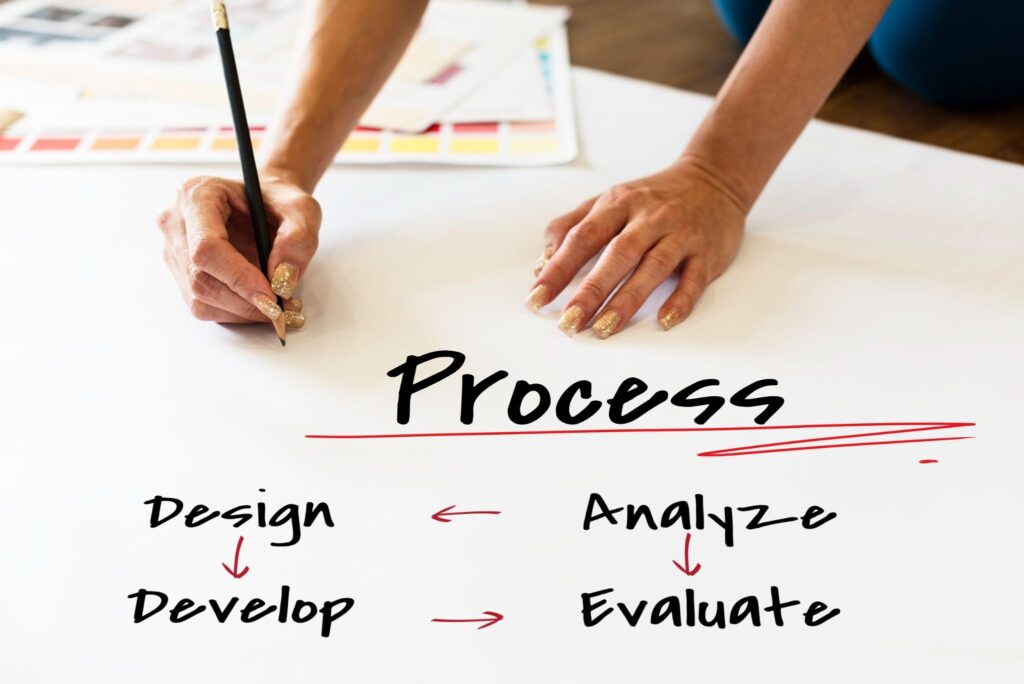
This phase translates discovery findings into a concrete learning strategy. Following ADDIE or an Agile development process, depending on project scope, the work typically runs one to two weeks and requires close collaboration between your team and your consulting partner.
The most important outcome here is specificity. Vague objectives like “improve communication skills” don’t drive measurable results. Your consulting partner’s job is to push until objectives are observable, tied to actual job performance, and defined in terms that allow you to measure change after the training launches.
Content Outline Creation and Approval Workflows
You’ll receive a strategy document outlining recommended learning approaches, content modules, delivery methods, and success metrics, which will require formal approval before development begins. That approval is the point at which misaligned expectations are resolved before they become expensive problems.
The strategy also establishes modular content architecture, which matters more than most stakeholders realize at this stage. Modular design means individual components can be updated as your organization evolves, rather than requiring a full rebuild every time something changes.
Storyboarding and Content Architecture Bring Ideas to Life
Storyboards are where the engagement starts to feel concrete. Detailed boards show how learners move through each module, the interactions they encounter, and how the content connects to actual job scenarios, and whether that ends up as eLearning, an animated explainer, facilitated workshop materials, or something more immersive.
Early-phase storyboards are wireframes: basic structure, content flow, placeholder media. Later versions show specific interactions, media elements, and assessment design. This graduated approach keeps feedback useful at each stage, rather than mixing structural concerns with cosmetic preferences in the same review cycle. The design goal throughout is behavior change, not content delivery. A learner completing a module should be equipped to do something differently. That’s the distinction between a serious instructional design consulting engagement and a content production contract.
The Reality of Review Cycles in Instructional Design Consulting Projects
Review cycles are an essential mechanism for quality. Budget adequate time for them, because rushing reviews is the second most common reason projects miss the mark. Each cycle typically runs three to five business days, depending on your internal approval process and the complexity of feedback. Your consulting partner needs consolidated input to make progress. Fragmented feedback from multiple reviewers generates conflicting revisions and stalls development.
Managing Feedback Loops in Your Instructional Design Consulting Project
Designate a single internal point of contact who consolidates and prioritizes all reviewer input before returning it to the consulting team. This one change eliminates the most common bottleneck in the review process. Effective feedback is specific and actionable. Instead of “make this more engaging,” describe what engagement looks like in your context: how learners typically interact with content, what level of interactivity they expect, what’s worked in past programs.
Useful consolidated feedback generally covers four areas:
- Content accuracy flags: Specific claims or terminology that need correction, with the correct version provided.
- Tone and voice notes: Where the content doesn’t match your organization’s language or culture, with examples.
- Interaction concerns: Any point where learner actions feel unclear or the navigation logic breaks.
- Alignment gaps: Places where the content diverges from the approved strategy document at the start.
Keep feedback within that scope. Cosmetic preferences that don’t affect learning outcomes are best deferred.
Implementation and Launch Support Complete the Process
A well-run instructional design consulting engagement doesn’t end at content delivery. Implementation support, pilot testing, and post-launch optimization are all part of the work, and skipping them undermines the development that came before.
Technical implementation requires coordination with your IT team or LMS administrators. 508 accessibility compliance review typically occurs at this stage as well, especially if your audience includes employees with disabilities or if you’re operating in a regulated environment. Your consulting partner should provide detailed deployment specifications and surface any integration issues before go-live.
Change management deserves attention here too; when new training replaces an existing program or requires new behaviors from managers, and not just individual contributors, adoption doesn’t happen automatically. You should plan your launch communication accordingly.
Quality Assurance Testing Before Go-Live
Pilot testing runs with a representative group of 10 to 25 learners from your actual target audience. The goal is to surface usability issues, navigation problems, and content gaps before full rollout. It’s also your first real signal on whether the learning objectives are landing.
Post-Launch Optimization and Iteration Planning
Track completion rates, assessment performance, and early behavior change indicators in the first 30 days. Post-launch data tells you whether the instructional design decisions made during development were correct, and where to iterate.
Performance improvement doesn’t end at launch. The best consulting partnerships include a clear framework for measuring results and a path to ongoing optimization as the organization and its performance needs evolve.
Start with a Partner Who Builds for Outcomes
The framework above describes what a serious instructional design consulting engagement looks like, from discovery through post-launch iteration. The distance between this and a standard content delivery contract is the difference between training that changes what people do and training that generates completion certificates.
It’s also the difference between a consulting partner who pushes back and one who takes orders. Genuine collaboration means shared responsibility for the outcome. Both sides have to show up for that.
Bubo Learning Design has applied this process across engagements with organizations including LinkedIn, Starlink, the United States Air Force, and the Smithsonian Institution. Our customized learning solutions, from eLearning curricula and leadership development programs to media production and 508-compliant content, are built around measurable performance outcomes, not content volume.
If you’re working through a performance challenge that a standard training program won’t solve, let’s talk. Reach out through our contact form or call (469) 409-BUBO to start the conversation.